Our May 2026 legislative update sheds light into the conclusion of most bills discussed below.
It’s time for another legal roundup here at SweepsKings – anti-sweepstakes casino legislation is still moving forward in a handful of US states, but things are indeed starting to tighten up as we head toward the end of the 2026 legislative sessions.
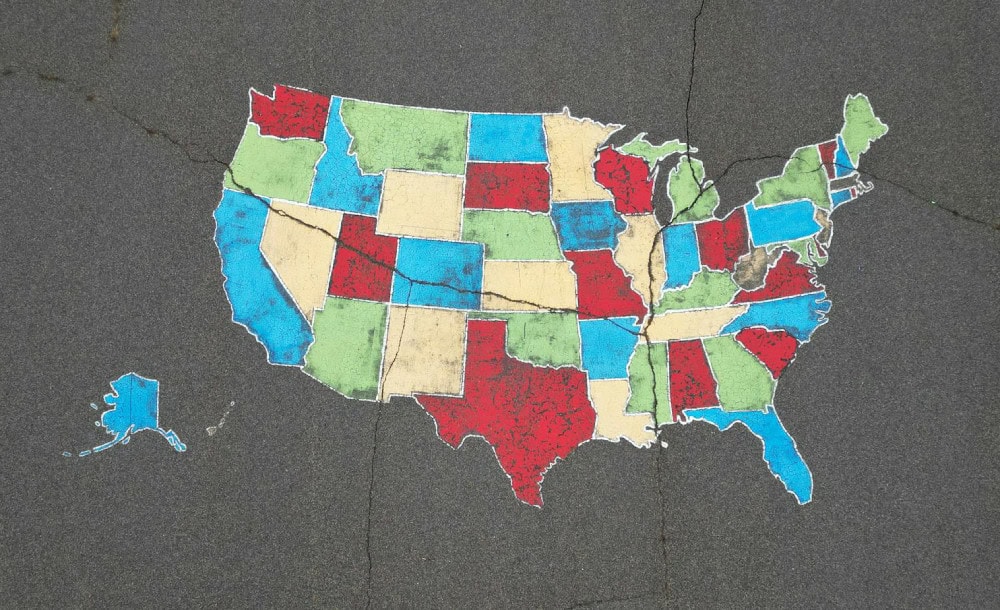
With deadlines creeping closer in a few places, we’re beginning to get a clearer sense of which bills have real momentum and which ones are starting to fade out, shaping what the sweepstakes landscape will look like for the rest of 2026.
Let’s look at the main states left considering bills related to sweepstakes casinos.
Tennessee
After a brief postponement at the request of bill sponsor Representative Cepicky, Tennessee’s HB 1885 once again made some progress through the committee stages. It was placed on the House Regular Calendar for April 16, putting it in line for a possible full House vote too. However, that date has passed with no action recorded, and this leaves the bill’s future uncertain.
HB 1885 is a straightforward anti-sweeps bill and it has a companion in SB 2136. That second bill did already pass the Senate unanimously and it was sent to the House in early March, but it effectively stalled there.
We’ll continue to monitor HB 1885, but with the session ending in four days’ time, time is definitely of the essence in TN.
Louisiana
Last week we reported on Louisiana’s HB 883 passing the House and moving onto the Senate – it’s still in the Senate system and scheduled for a second reading but with no further action recorded there yet.
This proposal builds on a similar one from last year – one that was ultimately rejected by Governor Jeff Landry. Landry said that Louisiana already has rules in place to deal with sweepstakes casinos, and the vast majority of operators have already left the state by now anyway.
HB 53 – which looks to bring “gambling by electronic sweepstakes device” under racketeering laws – has also been moving through the Senate.
So for now, both bills remain active in the pipeline with HB 53 slightly ahead, and there’s still plenty of time before the LA session ends at the start of June.
Oklahoma
SB 1589 in Oklahoma looks to amend Section 941 of state law, the core criminal gambling statute. In short, it seeks to outlaw “online casino games” including those with a “dual-currency system”.
In terms of an update, after little movement following unanimous Senate passage in early March, it’s now begun moving through the House process again, picking up momentum in committee stages this month.
So SB 1589 is another one to monitor, with OK having over a month left until the end of the 2026 session – still time to push this through.
Minnesota
SB 4474, Minnesota’s proposed ban on sweepstakes casinos missed a deadline designed to keep bills moving on a clean track last month. However, it’s worth noting that these deadlines are not always hard cut-offs that automatically kill legislation – bills that miss them can still progress, and SF 4474 did ultimately regain its footing and make progress.
That being said, the last action on it was a week ago, so while it’s still technically active, there’s been no clear push toward a floor vote. This leaves its prospects uncertain with around a month left in the session.
Maryland
Finally, sweepstakes casino operators and players in Maryland can breathe a sigh of relief as HB 295 and HB 1226 both failed to move beyond the Senate committee stage before the end of the session on April 13.
HB 295 would have strengthened the rules around sweepstakes within existing state law, including marking sweepstakes-style games as illegal – these were defined as those which use “multiple currency systems of payment”.
HB 1226, on the other hand, was looking to strengthen the wider legal framework for illegal online gambling in Maryland. As part of this, sweepstakes games would have been made definitively illegal, alongside giving regulators clearer, faster, and more explicit tools to act against illegal activity.
This was Maryland’s second attempt at passing an anti-sweeps law in some form, but with echoes of last year, the bills expired after passing one chamber. This was despite HB 295 being supported by the Maryland Lottery and Gaming Control Agency (MLGCA), and even Governor Wes Moore.
The outcome of the two MD bills this year proves how the legislature is not always completely in step with the regulator and Governor.
Conclusion
So while Indiana and Maine have already signed anti-sweeps bills into law this year, the picture elsewhere is still unresolved, with most of the above states still working through processes.
2026 could easily produce fewer anti-sweeps laws than 2025, but to be certain we’ll continue to monitor things in Tennessee, Louisiana, Oklahoma, and Minnesota.

Author: Jon Ridehalgh
Updated: