There’s been an interesting development in one of 2026’s still-active bills targeting sweepstakes casinos: it’s now been amended to potentially allow them to operate as regulated entities alongside real money online casinos.
Washington, D.C.’s Council Bill B26-0656 was introduced by Councilmember Wendell Felder in April. Originally, it aimed to open up legal iGaming in the District while blocking sweepstakes casinos, essentially following the approach taken in a number of other jurisdictions. Maine, for example, legalized online casino gaming for its tribal operators this year while banning sweepstakes casinos.
However, an amendment approved by the D.C. Council’s Committee on Human Services on November 18 has changed the picture. Rather than simply banning sweepstakes casinos, the revised bill would give sweeps operators a potential route into the regulated market.
The full amended bill text has yet to be officially published, but we’ve seen a copy of the D.C. Chief Financial Officer’s fiscal impact statement, which was prepared using a draft of the committee’s amended bill. It gives us an early look at what the proposed framework could mean for sweepstakes casino operators.
The committee voted 3-1 to advance the amended bill. It still has a long way to go before becoming law, but the changes raise some interesting questions for stakeholders in the sweeps space.
A Route Into the Regulated Market
According to the fiscal impact statement, the amended bill defines regulated gaming as:
“participating in a casino-style game, or a social plus sweepstakes style game conducted through an internet gaming platform in which a patron can wager money or something of value for the opportunity to win money, a prize, or prize equivalent.”
The proposal would allow the District’s Office of Lottery and Gaming (OLG) to issue licenses to operators. On the face of it, this could be good news for the sweeps industry. However, there are some significant caveats.
First, operators would face a non-refundable initial application fee of $2 million. Licenses would then need to be renewed every five years, at a cost of $1 million.
On top of that, the proposed tax rate is 25% of adjusted gross internet gaming revenue. Operators would also pay a further 4%: a 2% Community Impact Assessment and a 2% Regulatory Assessment.
That brings the combined rate to 29% for standard internet gaming revenue, putting D.C. toward the more expensive end of the regulated iGaming market (live dealer revenue would be taxed at a lower rate of 12.5%, bringing the combined rate for that revenue to 16.5%).
Operators Would Have to Stream Live Dealer Games from D.C.
And there are other requirements too.
Operators would have to offer live dealer games streamed from a physical studio in the District. This appears designed to create local jobs, but running such a studio would, of course, add another significant expense.
Operators would also be limited to a maximum of two approved gaming brands/sites each.
Already, the incentive for smaller sweeps casinos to enter the market looks limited, and that’s before we consider D.C.’s relatively small population. With just under 700,000 residents, the District is smaller than all but two U.S. states (Wyoming and Vermont).
For smaller operators, that leaves a limited customer base from which to recover the proposed costs. Even for larger companies, the economics of entering D.C. could prove difficult to justify.
What Could it Mean for the Bigger Sweepstakes Casinos?
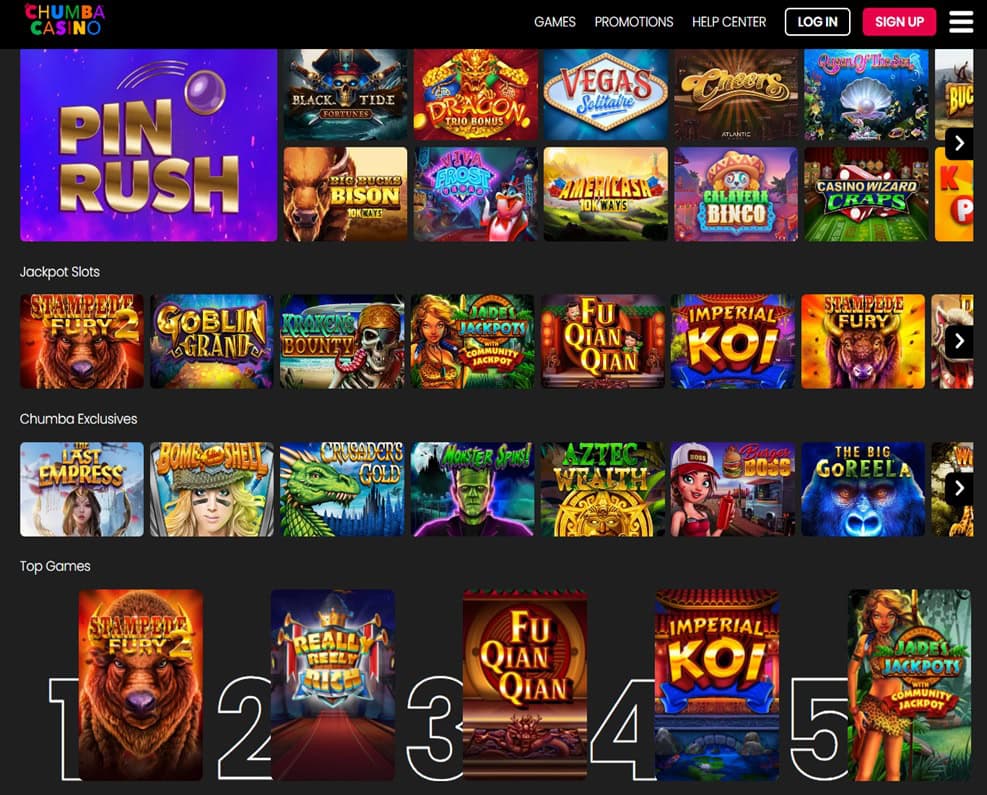
Let’s take one of the market leaders, VGW (operator of Chumba Casino and more), as a rough example.
VGW reported overall net profit of approximately US$428 million for FY2025 across its business. Using a crude estimate based on D.C.’s population (0.2% of the total U.S. population), this would imply around $869,000 in annual net profit for VGW from D.C.
Applying the proposed 29% rate to that figure, alongside the annualized cost of the initial $2 million license fee, would leave approximately $217,000 per year.
These are very rough figures, but they give an indication of how quickly the proposed charges could eat into a return from such a small and expensive market.
And that doesn’t even take into account the expense of establishing and operating a live dealer studio in D.C., or the impact of being restricted to just two gaming brands.
D.C. Takes A Tougher Approach to Unlicensed Operators
On the other hand, the amended bill would give the OLG codified powers to pursue unlicensed operators, including through cease-and-desist orders. The Attorney General would also be given enforcement powers.
That’s to be expected in a jurisdiction looking to establish a regulated iGaming market. But it could easily mean that sweeps operators unwilling or unable to meet the requirements would no longer have the option of serving D.C. players.
Council Bill B26-0656 still has a long way to go before becoming law. It faces a tight legislative timetable, with the current Council period approaching its end. The full Council must pass the bill through two readings by December 15 or it won’t progress during this period.
It’s also worth noting that D.C. appears to be only the second U.S. jurisdiction to have formally considered a route for licensing sweepstakes casinos, following proposals in New Jersey in 2025 and 2026 that failed to advance.
Closing Thoughts
It will be interesting to see what happens next in D.C.
If the bill passes in something close to its current form, it seems unlikely to create a thriving new market for multiple sweepstakes casino operators. In fact, the costs and restrictions could prompt many operators to stay away or withdraw from the District. However, given D.C.’s relatively small population, the immediate impact would likely be limited.
The proposal raises a much bigger question, though. If other, larger jurisdictions consider bringing sweepstakes casinos into their regulated iGaming frameworks, would that regulation look similar to D.C.’s, and would operators be willing to accept the associated costs and restrictions?
It’s an approach that parts of the sweeps industry have publicly advocated for, including the Social Gaming Leadership Alliance (SGLA). But in this form, regulation could create a stark contrast with the business model and margins that have allowed sweepstakes casinos to thrive.
There’s also a more existential question: if dual-currency sweepstakes casinos and real-money iGaming operators are both allowed to operate in the same market and under the same regulations, what advantage does the dual-currency model actually offer?

Author: Jon Ridehalgh
Updated: