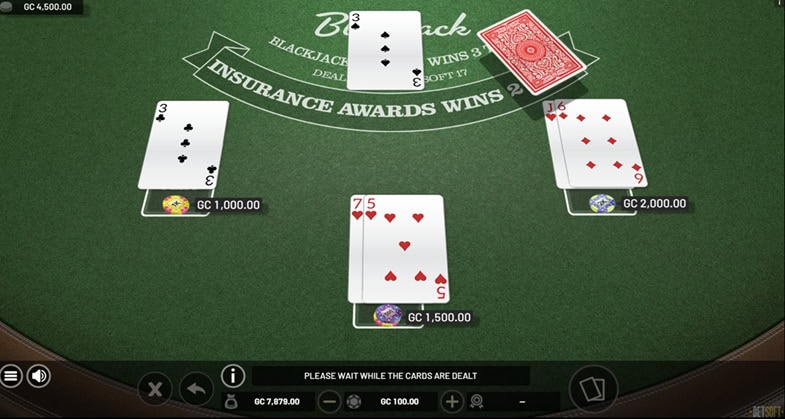
We’ve noticed that several sweepstakes casinos are now restricting card, dice, and table games in a recurring group of states: Florida, Georgia, Hawaii, and, in some cases, West Virginia.
These rules still allow players in the affected states to access other sweepstakes games, such as slots, meaning the restrictions target particular game categories rather than sweepstakes play as a whole.
Let’s look at which online operators have these rules and what might be behind them.
Which Sweepstakes Casinos Restrict Card and Table Games?
The following sweeps operators include clauses in their terms or rules creating groups with names like ‘Restricted Game States‘.
“Restricted Game States means Florida, Georgia, and Hawaii, in which Table- and Card-style games are not available to Players.”
“‘Restricted Game Territory’ means the States of Florida, Georgia, Hawaii and West Virginia, where card and dice Games are not available in Promotional Play.”
“In addition, Sweepstakes Coin Games involving cards or dice, including live-dealer and table games, are not available to Users physically located in Florida, Georgia, Hawaii or West Virginia. These game-specific restrictions do not, by themselves, prohibit all other Sweepstakes Coin Games in those four states.”
“‘Live Casino Games’ means games conducted with a live dealer or real-time streamed interface, including but not limited to live blackjack, roulette, baccarat, game shows, or similar formats. Live Casino Games are not available to users located in Florida, Georgia, Hawaii, or West Virginia.”
Sites like Casinio and Golden Buck have similar clauses too, and so far, the restrictions we’ve found seem to appear across newer sweeps casinos.
By contrast, major brands like McLuck, WOW Vegas, and Stake.us don’t appear to have these clauses in their rules.
Why Are These States Being Treated Differently?
Unfortunately, there’s no confirmed explanation for why Florida, Georgia, Hawaii, and West Virginia keep appearing in these restrictions.
A few possibilities could help explain the pattern, but each one is simply speculation.
State Gambling Laws
One possible explanation is that operators or their legal advisers see particular legal risks in offering card and table games in these states.
Florida’s anti-gambling law, for example, covers “any game at cards, keno, roulette, faro or other game of chance” played for “money or other thing of value.” This is set out in Section 849.08 of the Florida Statutes.
But similar laws exist in plenty of other states that aren’t mentioned as restricted.
For example, the Texas Penal Code §47.02 makes it an offence to “play and bet for money or other thing of value at any game played with cards, dice, balls, or any other gambling device.”
Another example is Delaware’s laws, which have similar wording. Section 1406 of its criminal code covers gaming tables and other devices where “cards, dice or any other game of chance is played for money, or other thing of value.”
So it’s possible that state law concerns play a role, but we haven’t found concrete evidence that fits into the pattern.
Shared Legal Advice or Compliance Policies
Linked to the above point, another possibility is that several operators have received similar advice from legal advisers or compliance consultants.
If a particular approach was recommended to reduce legal risk, it could have spread between operators, even if their rules use slightly different wording. It’s also possible that several brands received similar advice from the same legal advisers.
We haven’t found evidence confirming that a particular law firm or compliance consultant is behind these restrictions, though.
Game Provider Restrictions
Game suppliers could also play a role. Some suppliers impose their own state restrictions, meaning a casino’s available games can depend on the rules set by the companies providing them.
We haven’t found evidence that providers have mandated these specific rules, though. To be clear, the restrictions appear in the operators’ own terms.
Conclusion
So for now, the reason behind these restrictions remains a bit of a mystery. What we do know is that several operators are singling out the same states and game categories, while others don’t appear to be following the same approach.
Whether this comes down to legal advice, shared compliance policies, or decisions made by individual game providers, it’ll be interesting to see if more sweeps casinos adopt similar restrictions, or if operators eventually shed some light on why these states are being treated differently.

Author: Alex Windsor
Updated: