The vast majority of legislative sessions across the US have now closed for the year, but there are still a few loose ends and developments worth watching in the sweeps space.
Let’s take a look at what’s still on the table, or was until recently.
Wyoming
Wyoming’s legislative session ended in March, but the state’s Select Committee on Gaming has been busy in the meantime, drafting and recommending an anti-sweeps bill in the form of 27LSO-0098.
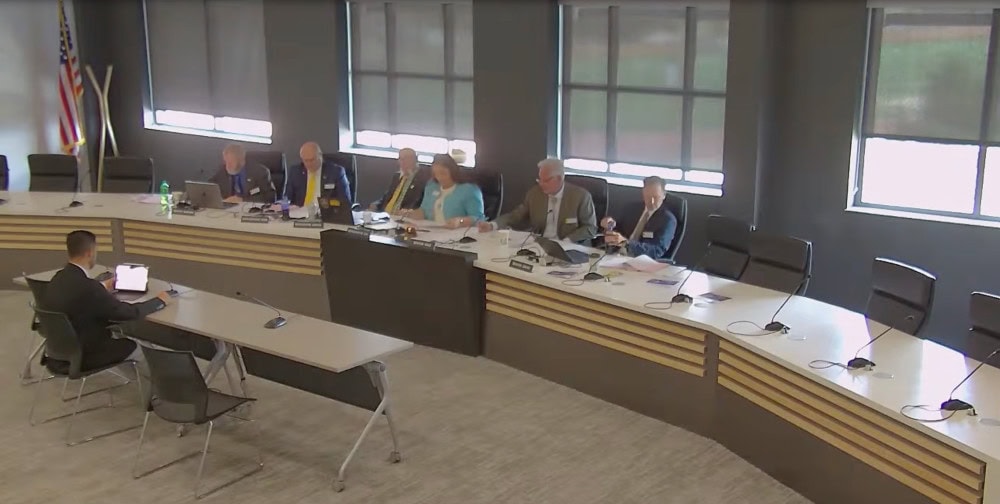
The draft legislation, which would classify operating or promoting online sweepstakes games as felony while exempting individual players, was forwarded by the Select Committee on Gaming to the Legislature’s Management Council, and it will soon consider whether to formally sponsor the bill for next year.
It’s also worth noting that an alternative draft that would have regulated and authorized sweepstakes casinos (27LSO-0200) failed to advance out of the committee in October, leaving prohibition as the sole possibility heading into the new year.
Pennsylvania
The Keystone State is an interesting case to look at. Its legislative session is one of the latest-ending in the country, and it is still technically active. There’s also been a flurry of enforcement activity in recent weeks relating to physical skill-game machines.
Meanwhile, a group of lawmakers took the opportunity to introduce House Bill 2801. This proposal formed part of a wider overhaul of Pennsylvania’s gaming laws. It also included a section that would make it illegal to operate, conduct, or promote online sweepstakes games in the state.
The enforcement effort against skill games has also brought sweepstakes-style gaming devices into the spotlight. In a November 10 update, Pennsylvania State Police said they had encountered businesses operating physical machines marketed as sweepstakes games. Police warned that such devices could still fall under the state’s gambling laws if they involve consideration to play simulated slot games for a chance to win cash or cash-equivalent prizes.
That doesn’t amount to a blanket prohibition on every online sweepstakes casino operating in Pennsylvania, but it does show that authorities are paying attention to sweepstakes-style gaming products.
As for HB 2801, it remains in the House Gaming Oversight Committee, with no vote on the bill. The committee hasn’t scheduled another meeting, and no further legislative session days are currently planned before the November 30 end of the current term. Unless lawmakers take further action, the proposal will need to be reintroduced in the next legislative session.
Virginia
Senate Bill 579 was introduced in Virginia in January, and it would have made online sweepstakes games illegal in VA with fines of up to $100,000. The bill failed to become law and was turned into a study instead, but then the study itself was effectively put on ice when the Senate Courts of Justice Committee voted 14-1 to carry SB 579 over to 2027.
Because the amended bill never advanced out of committee for a full vote or received the Governor’s signature, the Virginia Lottery Board work group was never legally authorized.
When the General Assembly reconvenes in January 2027, lawmakers will pick up that unpassed study text as their starting point, leaving them free to update the timeline, let the bill expire, or rewrite it back into an outright prohibition.
Washington D.C.
D.C. is another jurisdiction with an active legislative session at the time of writing. In fact, it operates year-round, and it’s currently considering Council Bill B26-0656, a proposal that was recently amended to potentially bring sweepstakes casinos into its regulated iGaming framework. Yes, on November 18, the D.C. Council’s Committee on Human Services voted 3-1 to advance the amended bill.
The original proposal sought to establish a framework for regulated real-money online gaming while prohibiting unlicensed sweepstakes casinos, but the amended version takes a different approach, allowing sweepstakes-based social games to operate under the same licensing and tax framework as conventional iGaming.
However, operators would face some substantial requirements. They’d have to offer live dealer games, with studios physically located in the District, and each operator would be limited to a maximum of two approved online gaming brands.
There are also significant financial commitments, including a $2 million licensing fee, a 25% tax on adjusted gross gaming revenue, and additional 2% regulatory and community impact assessments.
And that’s before you consider the relatively small population of around 700,000 residents. For many sweepstakes operators, the combination could make the District a difficult market to justify.
Either way, the bill has not yet passed the full Council; it still needs to clear two readings, with the first expected on December 1 and the second scheduled for December 15. If approved, it would then go to the mayor, who would have 10 days to sign or veto it, before undergoing a mandatory 30-day congressional review.
Plus, the current Council Period ends on January 2, 2027, so there is a relatively narrow window for the bill to complete the process.
New Jersey
New Jersey’s session is another late-ending one and it’s still technically in session, as is SB 1500. This is a sweepstakes-regulating bill introduced in January, pairing with CB B26-0656 in D.C. to make the only two proper proposals working towards regulated sweeps casino this year.

The bill was introduced by Senator Joseph Cryan (pictured) and looks to bring sweepstakes casinos into the licensed framework that already exists in the Garden State. Under the proposal, operators would need to obtain the relevant licences and meet the state’s existing internet gaming requirements.
Compared with the current proposal in D.C., NJ’s approach seems to have fewer requirements. However, it’s still not 100% straightforward, as applicants would need to partner with an existing casino licensee, meaning access to the state’s iGaming market would depend on securing an established industry partner.
All that being said, despite being introduced back in January, SB 1500 has made virtually no progress. It was referred to the Senate State Government, Wagering, Tourism and Historic Preservation Committee on January 13, but it hasn’t received a hearing or a committee vote. So with the legislative session approaching its end, the proposal looks very unlikely to advance this year.
New York
You might remember that New York was one of the states that banned sweepstakes casinos last year, with that ban coming into effect upon Governor Kathy Hochul’s signature in December. So what’s left to regulate in relation to sweeps in the Empire State?
Well, Senate Bill 10092, titled the No Gambling Ads for Kids Act, was introduced by Senator Samra G. Brouk on April 28. It was designed to restrict gambling-related advertising aimed at minors, including promotions for online sweepstakes gaming; this wasn’t covered explicitly in last year’s sweeps ban.
The bill received strong support in the Senate, passing by 60 votes to zero on June 1. However, it was then sent to the Assembly, where it was referred to the Consumer Affairs and Protection Committee. Unfortunately for its supporters, it made no further progress past this point. There was no Assembly vote, and the proposal did not become law as the NY session ended June 5.
Maine
In Maine too, the legislative debate has already produced a concrete outcome. LD 2007, titled An Act Regarding the Prohibition of Online Sweepstakes Games, was signed into law by Governor Janet Mills on April 6 and took effect on July 29, 2026.
This legislation prohibits operating, promoting, or supporting online sweepstakes games that use a dual-currency payment system and simulate casino-style gaming. Violators face civil fines ranging from $10,000 to $100,000.
As a result, most major sweepstakes casino operators have already withdrawn from Maine, with others subsequently restricting access or moving to Gold Coin-only play. Essentially, the state has disappeared as a real-prize market for the mainstream sweeps industry.
Relatedly, Maine’s wider iGaming landscape is also changing. LD 1164 became law without the Governor’s signature on January 11, authorizing the Wabanaki Nations to offer regulated internet gaming through licensed commercial partners.
That market is not live yet, but the state Gambling Control Unit has indicated that the first quarter of 2027 is a realistic launch target.
Closing Thoughts
So, apart from the proposals in Wyoming and Virginia to be looked at in 2027, Washington D.C. is the only real bill that’s still alive at the time of writing, and we’ll know much more about its direction by the end of December.
As we head into 2027, it’s likely that more states will follow the prohibition route, but equally, D.C. and NJ’s attempts to bring sweepstakes-style gaming into a regulated framework could provide a model for others to consider too.

Author: Bogdan Lunkan
Updated: