Eilers & Krejcik Gaming (EKG) projects the US sweepstakes casino market will grow by 12.9% in 2027, even with operators facing increasing restrictions as states ban the dual-currency format.
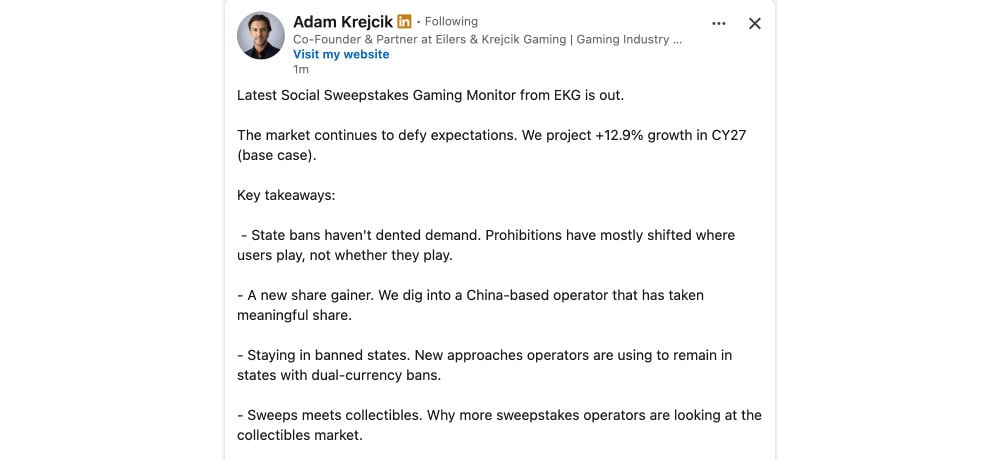
In a LinkedIn post announcing its September 2026 Social Sweepstakes Gaming Monitor, EKG co-founder Adam Krejcik said the firm expects the market to expand by 12.9% next year under its base-case forecast.
Two of the trends that Krejcik highlighted as contributing to potential growth are:
- New approaches operators are taking to work around bans and remain active in affected states
- In particular, a growing interest in collectibles among sweeps casino brands
EKG is a research and advisory firm focused on iGaming, and its reports are often used as benchmarks for the sweepstakes industry. It should be noted that it also has an investment arm, EKG Ventures, which has invested in companies across the gaming sector, including sweeps brands like Fliff and JefeBet.
Sweeps Casinos Explore New Approaches in Restricted States
Sweepstakes casinos traditionally operate via the dual-currency model, referring to the way Gold Coins (GC) and Sweeps Coins (SC) work as two virtual credits, and this creates a gray area loophole that operators have used to offer games under sweepstakes rules across the US.
Over the past two years, states like California and New York have sought to close that loophole by banning “dual-currency” gaming, but some operators appear to believe they can offer similar platforms that don’t technically use such a system. The emerging term for many of these is “single-currency”.
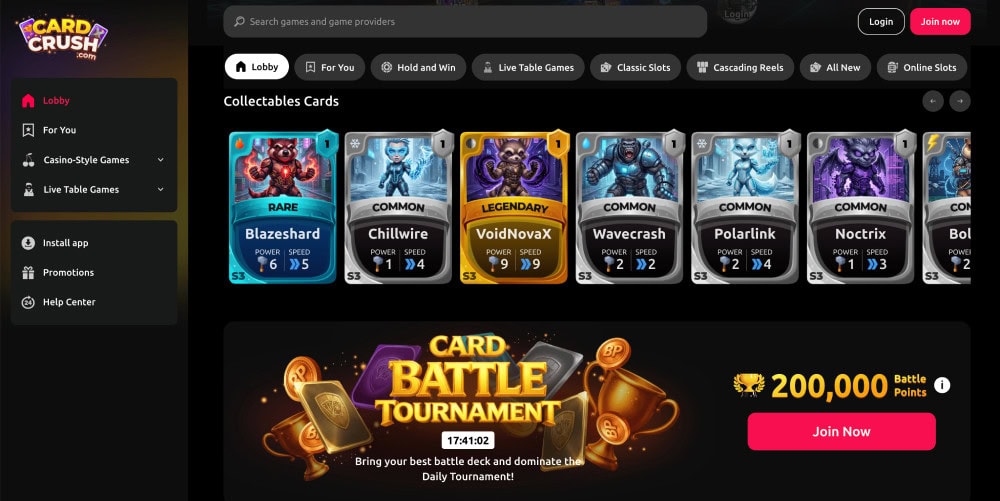
Card Crush is one example, and it launched at the end of last year, before the California ban had even come into effect. This platform combines collectible card battles with casino-style games, using a single currency called Mystery Coins alongside the cards, which aren’t a currency. In terms of availability, it’s accessible in all states except Nevada and Washington at the time of writing.
Candy Coins offers another variation, combining a casino-style game lobby with a separate Battle Arena where members play a slot-like minigame against other players. Its main Candy Coins currency is used for the casino games, while separate Battle Passes provide entry to the competitive mode, and the latter aren’t classed as a currency. Once again, Nevada and Washington are the only two restricted states at the time of writing.
These are two examples of operators offering a broadly similar gaming experience, likely retaining many of the sweeps players from before the ban. Whether these alternative formats stand up to regulatory scrutiny in the long term remains to be seen, but they show how operators are continuing to profit in the post-ban environment.
Sweeps Casinos Move Into Collectibles
EKG’s report also highlights a growing interest in collectibles, a trend that’s spreading across the wider online gaming market.
GameStop, for example, launched its Power Packs product in April 2026, allowing customers to buy digital packs containing physical trading cards and then keep, ship, or sell the cards they reveal. Other dedicated platforms such as Rips and Tilt Rips offer similar digital pack-opening experiences.
So it was only a matter of time before sweeps casino brands started exploring the same idea; for operators, collectibles offer a way to diversify their platform while tapping into a proven and growing market that sits somewhere between card collecting and gambling.
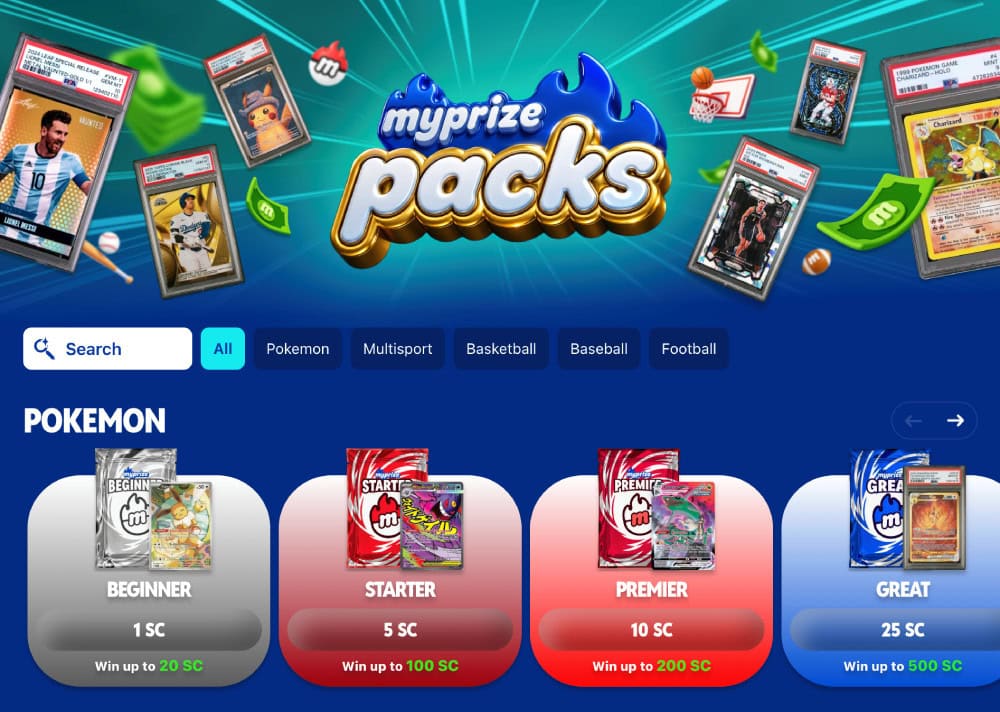
We’ve recently seen sweeps sites like Crown Coins and MyPrize launch their own Pokemon and sports card products (‘Rips’ and ‘Packs’, respectively), offering another form of gaming for players in states where traditional sweepstakes formats face restrictions. Modo has also introduced its unboxing-style Boxes feature.
Together, these developments show how sweepstakes operators are adapting as the traditional dual-currency model faces increasing restrictions.
Whether these approaches will prove sustainable in the long term remains to be seen, but with EKG forecasting 12.9% growth for the US sweepstakes casino market in 2027, the industry could prove more resilient than many expect.

Author: Joseph Allen
Updated: