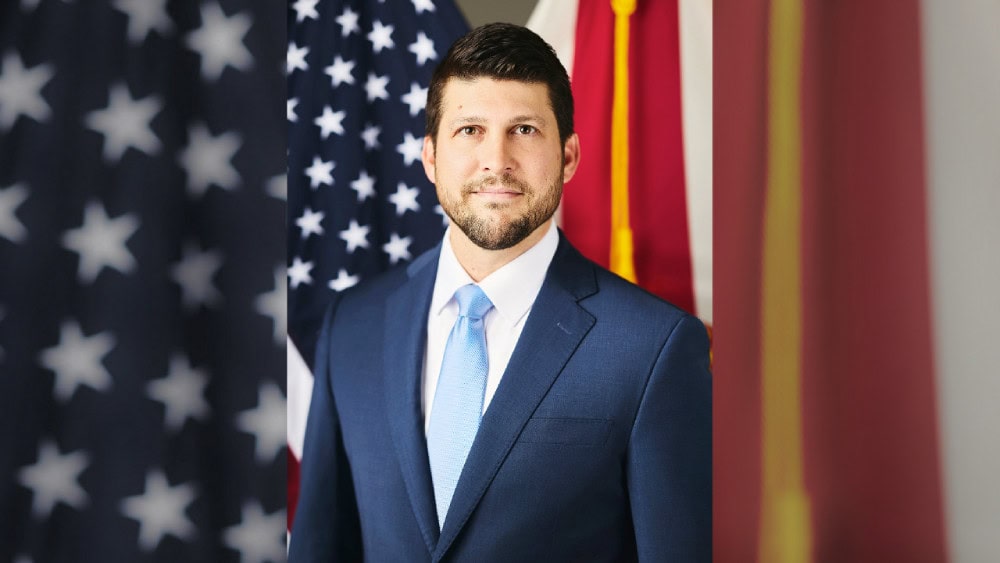
Florida Attorney General James Uthmeier (pictured) has filed lawsuits against two of the biggest sweepstakes operators in the US – VGW, which operates Chumba Casino, LuckyLand Casino and Global Poker, and Sweepsteaks Ltd., the company behind Stake.us – along with their respective payment processors (and more recently their advertising platforms like Meta).
This marks a major escalation from the information gathering and subpoena stage we saw at the start of the year. Uthmeier took an unusually cooperative approach then, meeting with sweeps operators to “exchange information” and allow them to “present their cases”.
That stage now appears to have reached its conclusion, with Uthmeier’s office alleging that sweepstakes casinos constitute illegal gambling under Florida law. And rather than issuing cease-and-desist orders and waiting for operators to respond, the AG has moved straight to legal action, with complaints filed against VGW and Sweepsteaks Ltd. in Hillsborough County Circuit Court yesterday.
The opening to both cases reads:
“Defendants operate and facilitate illegal online casinos in the State of Florida. They call them ‘sweepstakes’ casinos as if that’s some sort of talismanic cure-all. But if it looks, swims, and quacks like a duck, it’s a duck.”
This mirrors the action taken by Kentucky Attorney General Russell Coleman in June, perhaps signaling a new approach in states’ fight against social/sweepstakes casinos.
The suits from Uthmeier’s office allege that the sweepstakes model constitutes illegal gambling under Florida law, despite the ‘free to play’ elements and use of a dual-currency structure with Gold Coins and Sweeps Coins.
Why Are Payment Companies Being Sued Too?
The complaints don’t just target the operators themselves – they also go after the payment processors. In the VGW case, these are Yodlee, Inc., Trustly, Inc., and Worldpay Holdco, LLC. The Stake lawsuit names Axis Tech Ltd. and Breeze Labs Payments Inc., while also targeting Kick, the popular streaming platform linked to Stake – the complaint alleges that Kick functions as a continuous advertisement for Stake.
As for the payment providers, Uthmeier argues that they are integral to allowing players to fund accounts, purchase coins, and receive payouts – essentially, he’s arguing that companies helping facilitate the transactions can also face liability.
And that liability is potentially significant. Uthmeier is seeking recovery of consumer losses, disgorgement of revenues, civil penalties, and injunctions that could shut down the defendants’ operations in Florida.
FL didn’t bring in a sweepstakes ban like other states over the last two years, but Uthmeier cites a number of existing laws in the filings, stating:
“Except under very limited circumstances, none of which apply to the facts and circumstances here, all forms of gambling are illegal in the State of Florida.”
Those limited circumstances do authorize the Seminole Tribe to offer online sports betting in Florida, but the state has never created a regulated online casino market, even with the Tribe. Unlike places such as New Jersey or Michigan, Floridians cannot legally access online slots, blackjack, roulette etc.
Uthmeier’s office has made clear that cracking down on illegal gambling is a priority, and this lines up with a quote from Jeremy Redfern, Uthmeier’s Deputy Chief of Staff from earlier this year:
“Our office is working with the Florida Legislature to increase penalties and the Gaming Commission to take down illicit markets; 2026 will be a record year in the fight against illegal gambling and the other major crime it brings to our state.”
What Happens Next?
While Attorneys General filing lawsuits against sweepstakes casinos is a new phenomenon, private legal challenges against operators have been playing out in courts across the US for years. And, as of yet, no major court ruling has definitively established that the sweepstakes casino model equals illegal gambling.
This is partly because many operators include arbitration clauses in their terms and conditions, meaning disputes with players can be moved into private rather than producing a public court ruling. We’ve already seen this happen multiple times.
But we’re now seeing a different kind of legal challenge emerge. Kentucky Attorney General Russell Coleman sued VGW in June, alleging that its sweepstakes casinos constitute illegal gambling under Kentucky law, and Florida has followed with similar lawsuits.
We’re now dealing with a different level of legal challenge, and potentially a much more consequential test of the model. For the wider sweepstakes gaming industry, it’s certainly something to pay attention to.
A ruling against the operators and their payment processors could give other states a basis for further enforcement, while a ruling in the operators’ favor could make it considerably harder for other AGs to argue that existing gambling laws already prohibit similar models.

Author: Joseph Allen
Updated: