A federal judge in Minnesota has denied Stake.us’ motion to compel arbitration in an ongoing lawsuit, meaning the sweepstakes casino will have to defend itself in court rather than resolve the dispute behind closed doors. This is according to the Minnesota Lawyer.
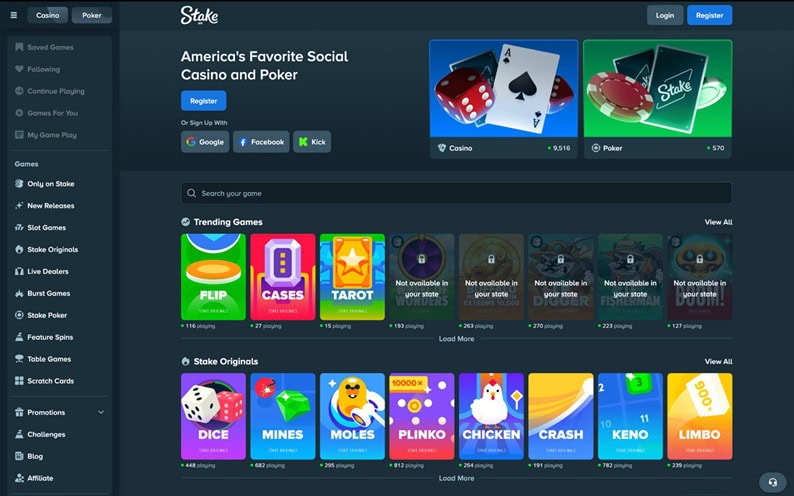
It’s an unusual outcome, with many similar cases accusing sweeps casinos of offering illegal gambling filed in the US every year. However, operators are usually able to compel arbitration during the early stages by pointing to clauses included in their T&Cs (these must be agreed to on signup for a player to even enter the casino).
But in this case, Judge John Tunheim stated that Stake.us hadn’t done enough to refute the plaintiff’s claims. He also cited Minnesota precedent stating that contracts entered into in potential violation of statutes can be considered void.
Essentially, the judge’s reasoning was that if Stake.us is ultimately found to be operating an illegal gambling platform, then the agreement users accepted when signing up could itself be invalid.
“[Plaintiff] Wolters has alleged facts demonstrating that Stake’s Terms and Conditions are an illegal gambling operation, and Stake has not yet presented any evidence to the contrary” wrote Judge Tunheim. “[I]f Stake’s Terms and Conditions are a contract entered into in violation of Minnesota’s gambling statutes, the Court must treat that contract as invalid and nonexistent”.
Stake.us Faces Class Action Lawsuit
This lawsuit was brought by Minnesota resident Chris Wolters, who filed a proposed class action against Stake.us in August 2025.
In his complaint, Wolters argues that Stake.us effectively operates as an illegal real-money online casino rather than a sweepstakes platform, since players can redeem winnings for cryptocurrency. He claims to have used the site between April 2023 and February 2025, during which time he lost more than $80,000 before seeking recovery for gambling addiction.
Stake.us, on the other hand, presents itself as a typical sweepstakes casino, where players can sign up and play casino-style games using two virtual currencies: Gold Coins and Stake Cash. This dual-currency model is designed to avoid the ‘consideration’ element typically used to classify a platform as traditional online gambling.
Stake.us and VGW Previously Won Similar Arbitration Battles
We don’t have to look far back to find examples of sweeps casinos successfully compelling arbitration – in fact, there’s even a recent example involving Stake.us.
In Hall v. Sweepstakes Limited (Stake.us), a federal court in Alabama granted Stake.us’ motion to compel arbitration in March this year. This lawsuit alleged that Stake.us was operating an illegal gambling platform too, but the court ruled that the arbitration clause in Stake’s terms was valid.
More recently, a similar outcome was reached in Baker v. VGW in July – a federal court in Georgia granted sweeps operator VGW’s motion to compel arbitration while defending its sweeps brands, including Chumba.
So cases against sweeps casinos are common in 2026, but operators have generally been able to quickly move these disputes away from public court proceedings thanks to arbitration. On the contrary, the Minnesota case will now continue in federal court.
Wolters’ attorney, Vildan A. Teske commented:
“We are pleased with the Court’s decision and look forward to litigating this case on behalf of our client and all of the other Minnesotans who have been impacted by Stake.us’ illegal gambling website.”
SweepsKings will continue to follow this case as it moves into largely uncharted territory for the sweepstakes casino industry.

Author: Alex Windsor
Updated: